Your Website Needs More Than Great Content: Why Technology and E-E-A-T Matter
The Foundation of a High-Performing Business Website
A successful business website requires more than attractive design, compelling headlines, and well-written content. Today, websites must demonstrate credibility, deliver exceptional user experiences, and meet increasingly sophisticated technical performance expectations.
Two critical components determine whether a website can compete effectively: the quality and authority of its content and the technology responsible for delivering that content.
Businesses frequently invest heavily in one while overlooking the other. Some publish hundreds of articles but operate slow, technically inefficient websites. Others invest in visually impressive, lightning-fast websites that offer little original insight or meaningful information.
Neither approach is sufficient.
At Full Stack Marketing Consultants, we believe sustainable digital performance requires integrating content strategy, search engine optimization, technical infrastructure, and continuous performance measurement.
E-E-A-T: Building Content That Demonstrates Credibility
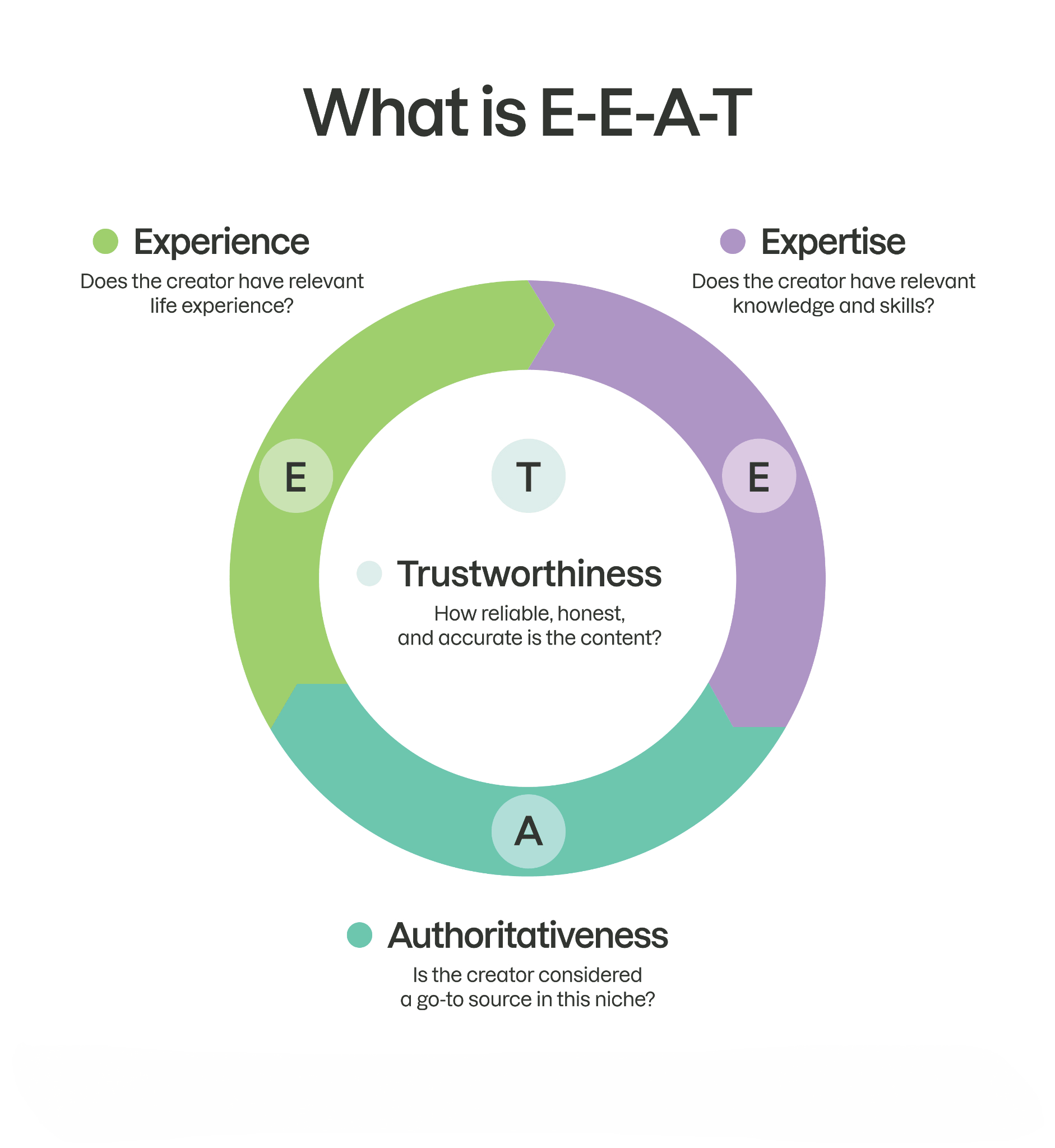
Google’s E-E-A-T framework represents Experience, Expertise, Authoritativeness, and Trustworthiness. These principles help explain the characteristics associated with useful, credible content.
E-E-A-T is not itself a direct Google ranking factor. Rather, Google’s systems evaluate numerous signals that may indicate whether content demonstrates these qualities.
Experience: Show What You Actually Know
Firsthand experience differentiates meaningful business content from generic information.
A cybersecurity company discussing threat prevention should draw upon practical implementation experience. An accounting firm explaining financial reporting should demonstrate familiarity with actual business accounting challenges.
Original observations, documented processes, real-world examples, and lessons learned provide value that generic articles cannot easily reproduce.
Businesses should use their operational experience as a competitive advantage.
Expertise: Provide Accurate, Substantive Information
Expertise requires understanding a subject deeply enough to explain it accurately and provide actionable guidance.
Effective website content should answer meaningful customer questions, clarify complicated subjects, and demonstrate technical or professional knowledge.
Content involving legal, financial, medical, or similarly consequential decisions requires particular care, appropriate qualifications, and reliable supporting information.
Simply inserting keywords into an article does not establish expertise.
Authoritativeness: Establish Industry Recognition
Authority develops when a business becomes a credible source of information within its industry.
Relevant professional credentials, original research, reputable references, industry participation, and recognition from trustworthy sources can strengthen that reputation.
A strategic publishing program organized around related subjects can also help demonstrate a company’s depth of knowledge.
Rather than publishing disconnected articles, businesses should develop comprehensive topic clusters that address important customer questions.
Trustworthiness: The Most Important Component
Trust is central to E-E-A-T.
Visitors should understand who operates a website, who created its content, and whether the information is reliable.
Accurate contact information, transparent company details, appropriate author attribution, documented sources, secure connections, and updated content all contribute to a trustworthy experience.
Trust cannot be manufactured through keyword repetition or superficial claims of expertise.
Google Lighthouse: Evaluating Website Quality
Even authoritative content can struggle to engage visitors when the website delivering it is technically inefficient.
Google Lighthouse provides automated audits that examine several important aspects of website quality.
Its primary assessment categories include:
- Performance: How efficiently a page loads and renders.
- Accessibility: Whether common barriers make the website difficult to use.
- Best Practices: Technical implementation and browser-related quality checks.
- SEO: Selected technical factors affecting search engine accessibility.
Lighthouse identifies problems such as oversized images, render-blocking resources, excessive JavaScript, and inefficient loading behavior.
However, Lighthouse is a diagnostic tool, not a complete measurement of business success.
A website scoring 100 in every Lighthouse category does not automatically achieve stronger search rankings, greater authority, or higher conversion rates.
The objective is to identify technical obstacles and systematically remove them.
Core Web Vitals: Measuring the Real User Experience
Google’s Core Web Vitals evaluate three essential dimensions of website performance.
Unlike a single laboratory test, these metrics can reflect experiences collected from actual Chrome users.
Largest Contentful Paint (LCP)
LCP measures how quickly the largest meaningful content element becomes visible.
Google’s good-performance threshold is 2.5 seconds or less.
Large hero images, inefficient server responses, unnecessary scripts, and poor caching strategies can delay this measurement.
Properly sized images, modern image formats, optimized hosting, content delivery networks, and efficient resource prioritization can improve loading performance.
Interaction to Next Paint (INP)
INP evaluates how responsive a page feels when visitors interact with it.
A good INP is 200 milliseconds or less.
Heavy JavaScript execution, inefficient event handlers, and excessive third-party scripts can make websites feel sluggish even after they appear loaded.
Reducing main-thread processing and carefully managing scripts can improve responsiveness.
Cumulative Layout Shift (CLS)
CLS measures unexpected movement of visible page elements.
A good CLS score is 0.1 or less.
Common causes include images without reserved dimensions, dynamically inserted advertisements, shifting navigation components, and late-loading fonts.
Stable layouts make websites easier to navigate and reduce frustrating interactions.
Google evaluates Core Web Vitals using the 75th percentile of user experiences, with mobile and desktop performance considered separately.
Beyond Core Web Vitals: The Technical Foundation
Website optimization requires attention to more than three performance metrics.
Several additional elements deserve continuous evaluation.
Server and hosting performance: Hosting architecture, response times, database efficiency, and caching determine how quickly content can be delivered.
Mobile responsiveness: Websites must remain readable, navigable, and functional across different screen sizes and devices.
Technical SEO: XML sitemaps, canonical URLs, internal linking, crawl permissions, redirects, and indexability help search engines discover and understand content.
Structured data: Appropriate, valid schema markup provides machine-readable context about organizations, articles, products, and services. It does not guarantee enhanced search appearances.
Accessibility: Semantic HTML, keyboard navigation, readable contrast, properly labeled controls, and meaningful image descriptions improve usability.
Security and reliability: HTTPS, software updates, controlled access, backups, and uptime monitoring help protect business operations and visitor trust.
Third-party services also require scrutiny. Analytics scripts, chat widgets, advertising tags, embedded videos, and marketing integrations can introduce substantial performance overhead.
Every component should justify its technical cost.
Why Content and Technology Must Work Together
Consider two competing websites.
The first publishes excellent industry research, but visitors experience slow loading, shifting layouts, and unresponsive navigation.
The second loads almost instantly but contains generic, outdated information that fails to answer customer questions.
Both create barriers to business growth.
The strongest websites combine useful, authoritative content with reliable technical execution.
That combination supports search visibility, strengthens customer confidence, encourages deeper engagement, and improves opportunities for conversion.
Importantly, Google does not guarantee rankings simply because a website achieves good Core Web Vitals. Relevance, content quality, competition, and many other factors remain important.
Technical optimization supports the content strategy; it cannot replace one.
A Continuous Website Optimization Strategy
Effective website management is an ongoing process rather than a one-time launch activity.
Businesses should periodically evaluate:
- Content quality: Accuracy, originality, relevance, E-E-A-T characteristics, and alignment with customer needs.
- Technical performance: Lighthouse findings, Core Web Vitals, server response times, and mobile usability.
- Search performance: Google Search Console indexing, impressions, clicks, and organic visibility.
- Business outcomes: Qualified inquiries, conversion rates, engagement, and revenue contribution.
Tools such as PageSpeed Insights, Chrome DevTools, Google Search Console, and the Chrome User Experience Report provide complementary information.
Laboratory tests help diagnose problems. Real-user performance data reveals what visitors actually experience.
Optimization priorities should consider both.
Your Website Should Be a Business Asset, Not Just an Online Presence
A modern website must accomplish several objectives simultaneously: communicate expertise, earn trust, perform efficiently, attract relevant visitors, and support measurable business results.
Content without technical excellence limits opportunity. Technology without meaningful content offers little reason for customers to engage.
Sustainable digital growth happens when content, technology, and business strategy operate together.
At Full Stack Marketing Consultants, our approach brings these disciplines together through strategic content development, technical SEO, website performance optimization, and data-driven digital marketing.
The goal is not simply to create a website that looks impressive or achieves an attractive benchmark score.
It is to build a reliable, authoritative digital platform that supports long-term business growth.
Is your website delivering the experience and credibility your business deserves?
Contact Full Stack Marketing Consultants to discuss a comprehensive evaluation of your website’s content strategy, technical performance, and opportunities for improvement.
#FullStackMarketingConsultants #WebsiteOptimization #TechnicalSEO #EEAT #CoreWebVitals #GoogleLighthouse #ContentMarketing #WebsitePerformance #DigitalMarketing #SEO #WebDevelopment